
PoNW’s Favorites | Fall 2026
Some wonderful new titles to burrow into this hibernating season:
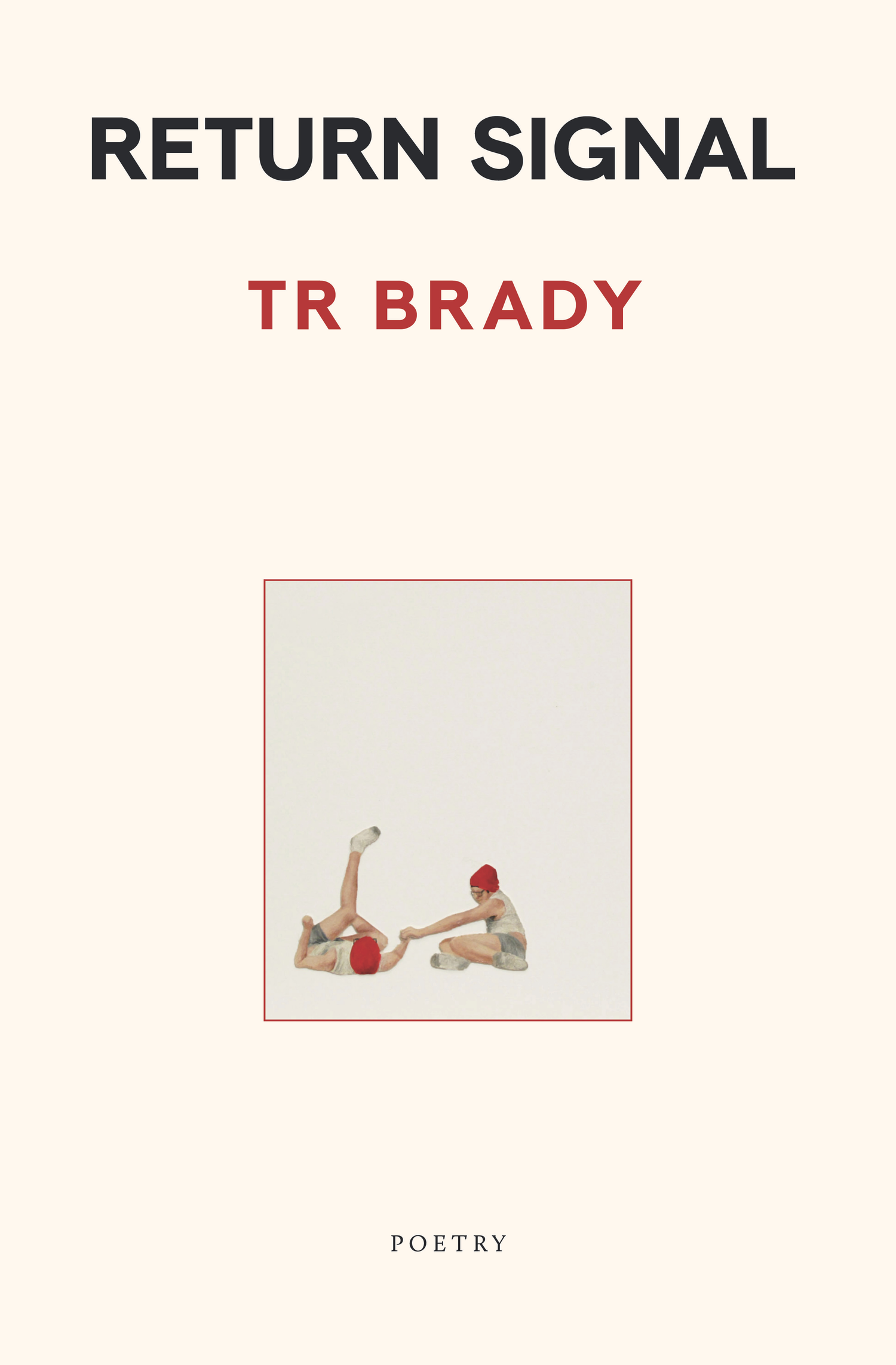
Return Signal, by TR Brady (Oct., NYU Press) is a revolution in practicality. Brady’s poems question our notions of the natural and practical by navigating transness and early adulthood through the muddled frontlines of memory and identity, from humid Arkansas to icy Iowa. Throughout this journey, the collection remains clear in its focus to reclaim the practical as unnatural and the natural as impractical, as poems visually flow yet condense, struggling to speak at times only to then sing instinctively, creating a collage that celebrates change and its practicality: “I’m telling you this isn’t vicious I want to occur / the way memory occurs”
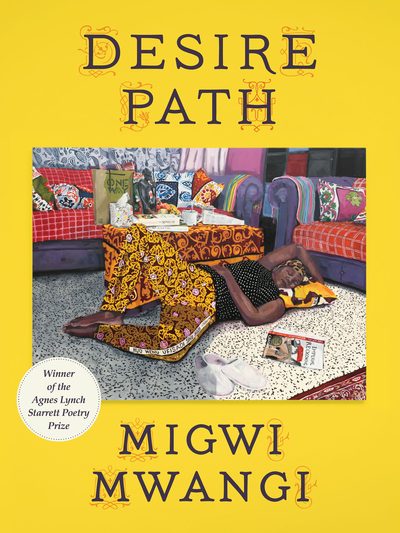
Desire Path, by Migwi Mwangi (Oct., UPitt Press) beautifully treks through many middles: of genre, of homeland, and of reality. The poetry collection constructs a literary maze of epigraphs, immigration forms, and language exams, whereby the sharp wit and earnest curiosity found in Mwangi’s writing serves as the reader’s guiding light. “Now, as though by some refraction light, we have bartered places.” The reality of inbetweeness of the migratory identity is indeed, never gained nor lost here, but negotiated, as poems afford their characters a sense of justice the world never did. An intimate reencounter between daydreams of the speaker’s New York and stories of his Kenyan homeland, Desire Path paves a boulevard of merging migratory memories: “sweeter than home before the leaving / but how else is one to know?”
At the River, by Esteban Rodriguez (Sep., NYU Press) is an immersive entrancement of gritty rhythm and musical repetition, solidifying a sense of place to a setting so often left transient. Situated in the Rio Grande area between Tamaulipas and Texas, the poetry collection luxuriates readers in a stillness it refuses to afford the speaker or his companions; while a day’s landscape is enough to change both sides of the international river, the poet poises his audience to a moment: “Purple. Yellow. Orange as nostalgic as / a painting of a desert sunset.” Accompanied by a series of monochrome photographs that help concentrate the vividness of Rodriguez’s strong, physical imagery, At the River is a triumph in knitting together the margins of a frontier, where “the wind aches with promises of gravity.”
Egrets, While War by Tishani Doshi (Sep., Copper Canyon) is a sanctuary of tender epiphanies amidst unrealized yesterdays, where poetry becomes both healer and nurturer of battle-hardened dreams. The results are almost instantaneous; whenever a poem’s closing impression casts a shadow of doubt or regret, the subsequent poem will unfold itself using playful alliteration, nostalgic imagery, or anchor its stanzas to a more intimate ‘you.’ Doshi builds a habitat where the recovery of memory can’t be negotiated through treaties, only realized by routine: “I still / can’t define what consciousness is, but I know there’s / a bed in which it lies.”
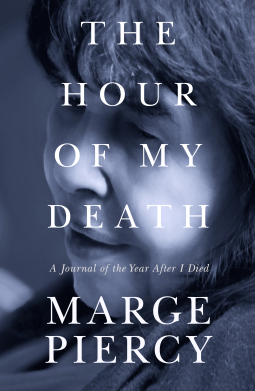
The Hour of My Death by Marge Piercy (Oct., Sibylline Press) feels aptly youthful, in both wonder and defiance. From the jaws of death comes Piercey’s prose and poetry—punches rolling, exploring and experimenting through recipes and essays, getting dirty and cleaning itself up in the sandbox of artistry. Childhood stories of mother’s mysterious stews are delivered next to goodbyes to friends who haunt dreams, all in a style that remains sophisticated in its simplicity, and simple in its sophistication. From the death of the first, Piercey builds a home for her second life, housing all that is worthy of living for again: “I hope these pleasures / last as long as I do.”
Running Away by Ha Jin (Oct., Copper Canyon) echoes voices beyond country, time, and terrain in these poems of treacherous migrations. Repetition through reversal; individual narratives that weave in and out of lives and borders. Ha Jin’s poems guide each other through the collection with the human solidarity of migrants–one who carries his daughter over a great wall; one who returns home and one who refuses; one who jumps ship–each of them remembering, “if you open your mouth, / there’s no right or wrong, as long as / you can get yourself across.”

Heritance by Paisley Rekdal (Sept., Copper Canyon) tells grief in six stages. In images that sweep the reader and writer and subject up whole, and in stanzas that provide steady structure on which to lean through this shared mourning. Like a child, and as a child, grown cynical of the present and the future, through loss of family, of love, of strangers—“So many versions of sorrow”—Rekdal has as many questions as she does memories. Heritance asks what we were meant to inherit from those whom we have loved, and what it is that we have actually kept.
In Emily Skaja’s second collection, Black Lake, private grief collides with collective and public grief. the messy, nonlinear “hedge maze” of a present dotted with lost futures. Skaja’s poems consider climate doom in the wake of pregnancy loss and authority figures who manipulate the language of basic physical reality. Formally various, Skaja is equally resonant in compressed lines and swirling sentences of narrative prose. One encounters a vivid realist scene on one page and plunges into a surreal underworld of decay on the next. There, loss is free from denial. These poems contend with an onslaught of voices—from doctors to lovers, from algorithmic tech-speak to John Keats, from wit to lush feeling—yet often return to the bare persistence of life itself: “Everything resets purest in analog. / Leaves in wet soil. Oil in the pain. // It’s only me who gets stuck / in September, waiting for an app / to tell me I’ll bleed again.” Skaja’s oscillations conjure a world that requires both the art of anesthesia and even more, the capacity to feel it all.
— Edited by Haley Sim, Yaser Cisneros, Paige Parsons, and Nanya Jhingran